Michael A. Fitts Professor of Law
Deputy Dean for Academic Affairs & Innovation
University of Pennsylvania Carey Law School
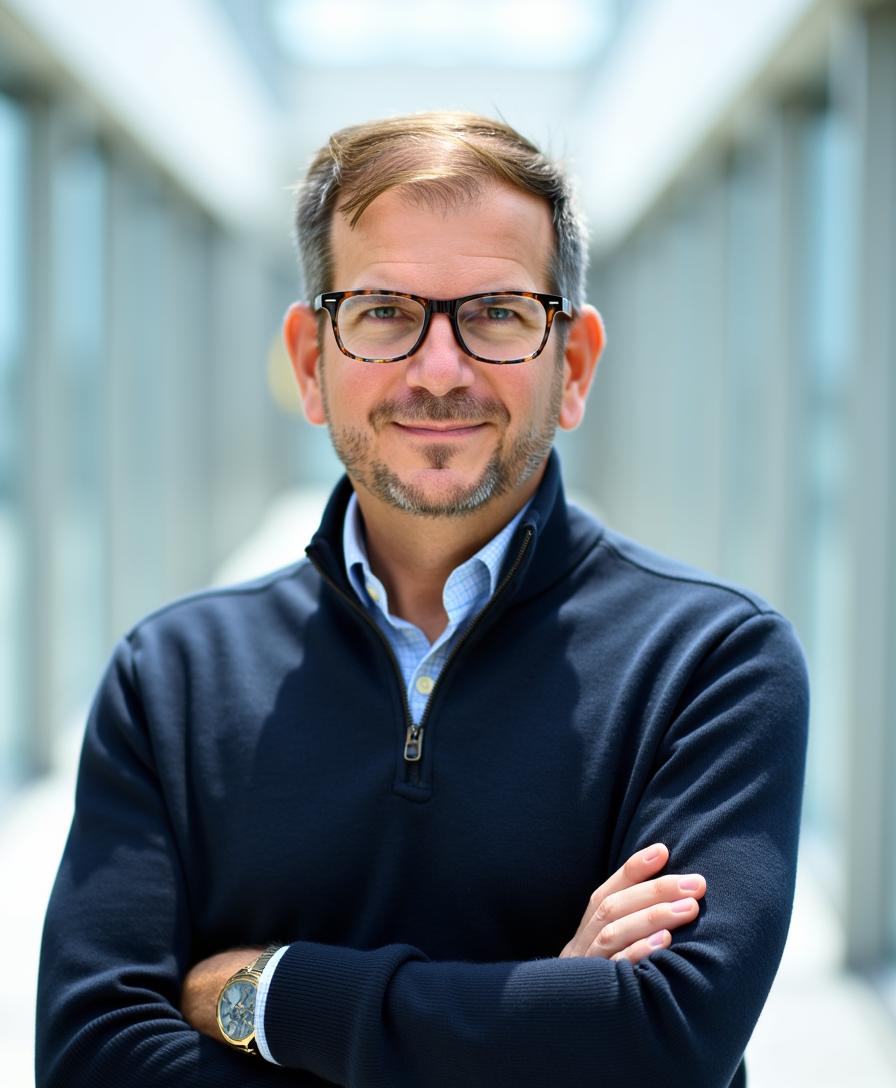
I'm a law professor and Deputy Dean for Academic Affairs & Innovation at the University of Pennsylvania Carey Law School. I work on intellectual property, AI, and legal education.
I teach and write about intellectual property, especially patent law, and I spend a lot of my time helping law faculty, judges, and the legal profession engage with AI tools. I'm also working with Penn Law's leadership to figure out what AI means for the future of legal education.
A few things I'm focused on right now.
I've served as Deputy Dean for Academic Affairs & Innovation at Penn Law since January 2024; I held a prior iteration of this role from 2016 to 2018. In this position I work closely with the Dean and faculty on curriculum, academic policy, innovations in pedagogy, and institutional strategy — including coordinating the law school's work on AI in legal education.
Before this appointment, I served as Faculty Director of PennLaw Online from 2018 to 2023, where I helped build and oversee Penn Law's online education programs. I've chaired or served on a number of the law school's committees over the years, including the Faculty Appointments Committee, the Educational Programs Committee, the Academic Careers Committee, and the Building Committee.
At the university level, I've served on the Provost's Council on Research, the Center for Technology Transfer Governing Board, and the Conflict of Interest Standing Committee.
AI is changing how law is practiced, taught, and understood — and legal education needs to keep up. I've spent the last few years working to make sure Penn Law is out in front of this shift. Not with hype and not with fear, but with the kind of practical, hands-on engagement that actually helps faculty, students, and the institution.
The center of that work is the AI Law Lab — a hub I created at Penn Law for hands-on AI work. The Lab runs faculty workshops, develops toolkits for integrating AI into teaching and scholarship, and serves as a clearinghouse for what's working and what isn't. The goal is simple: lower the barrier to entry so faculty can figure out how these tools fit into their own work.
On the concrete side, I've built two open resource portals — one for AI resources and one for pedagogy resources — to give faculty a single place to find guidance, policies, and examples. We've also partnered with Harvey and ChatGPT EDU to bring professional-grade AI tools directly into the law school, and the Madhani Legal Tech Fellowship supports students doing innovative work in legal technology.
My view on all of this is pretty straightforward: faculty should be using these tools, not avoiding them. The students already are. The practicing bar already is. Legal education can either lead or react — and I'd rather we lead.
I've built and open-sourced a set of Claude Code skills for law faculty — practical, ready-to-use tools for class preparation, exam question generation, lecture slide review, document production, and more. I've also released a PDF-to-markdown converter optimized for legal casebooks, and a collection of custom GPT system cards for legal education workflows.
I primarily teach intellectual property and patent law at Penn Law, across the 1L and upper-level curriculum.
A 1L elective surveying the major IP regimes: patents, copyrights, trademarks, trade secrets, and the right of publicity. The course focuses on how these systems overlap, where they conflict, and why the boundaries between them matter.
An upper-level deep look at patent doctrine, prosecution, and litigation — and the policy questions running through all of it. Who should get patents, how broad should they be, and what happens when the system breaks down.
Students brief and argue a real patent case before a panel of judges — real cases, real briefs, real oral arguments. One of the most intensive upper-level experiences we offer.
I've also taught Contracts, Property, Advanced Patent Law, Electronic Commerce, Journal of Law & Innovation Seminar, and several courses through PennLaw Online including Introduction to Patent Law and Intellectual Property in Health Care.
I teach a three-course Intellectual Property Law Specialization on Coursera through the University of Pennsylvania:
My research focuses on patent law, intellectual property, and the federal courts — particularly how doctrinal rules interact with the institutions that apply them. Some highlights:
When I'm not at the law school, I'm usually on or near the water. I've been racing sailboats since college — I was on the varsity sailing team at the College of Charleston and was named ICSA All-American Crew in 1991 — and I've never really stopped.
These days I race a Melges 15, a Laser (ILCA), and a J/70 — mostly out of Little Traverse Yacht Club in Harbor Springs, Michigan. On the M15 circuit, I finished 2nd in the Masters Division at the 2025 U.S. National Championship. In the J/70 class, I served on the International Executive Committee and as Technical Chair from 2016 to 2023, and placed 5th in the Corinthian Division at the 2019 North American Championship. I've been competitive in the Harbor Springs Laser fleet and the LTYC J/70 fleet for years, with multiple season wins in both.
I've completed 20 Chicago-Mackinac Races and 15 Bayview-Mackinac Races. In 2021, our team on the J/111 No Surprise won the Mackinac Cup — the overall prize for the Chicago race — with additional class wins in 2018 and 2022. I've also won class in the Queen's Cup aboard the J/111 Striking Back in 2023 and 2024.
Off the water, I'm a World Sailing International Measurer and have completed the US Sailing Principal Race Officer course. I served as Rear Commodore of Little Traverse Yacht Club from 2018 to 2020, and as President of Little Traverse Sailors from 2016 to 2019.
Melges 15 Class
J/70 International Class
ILCA International Class